 Admin
Admin 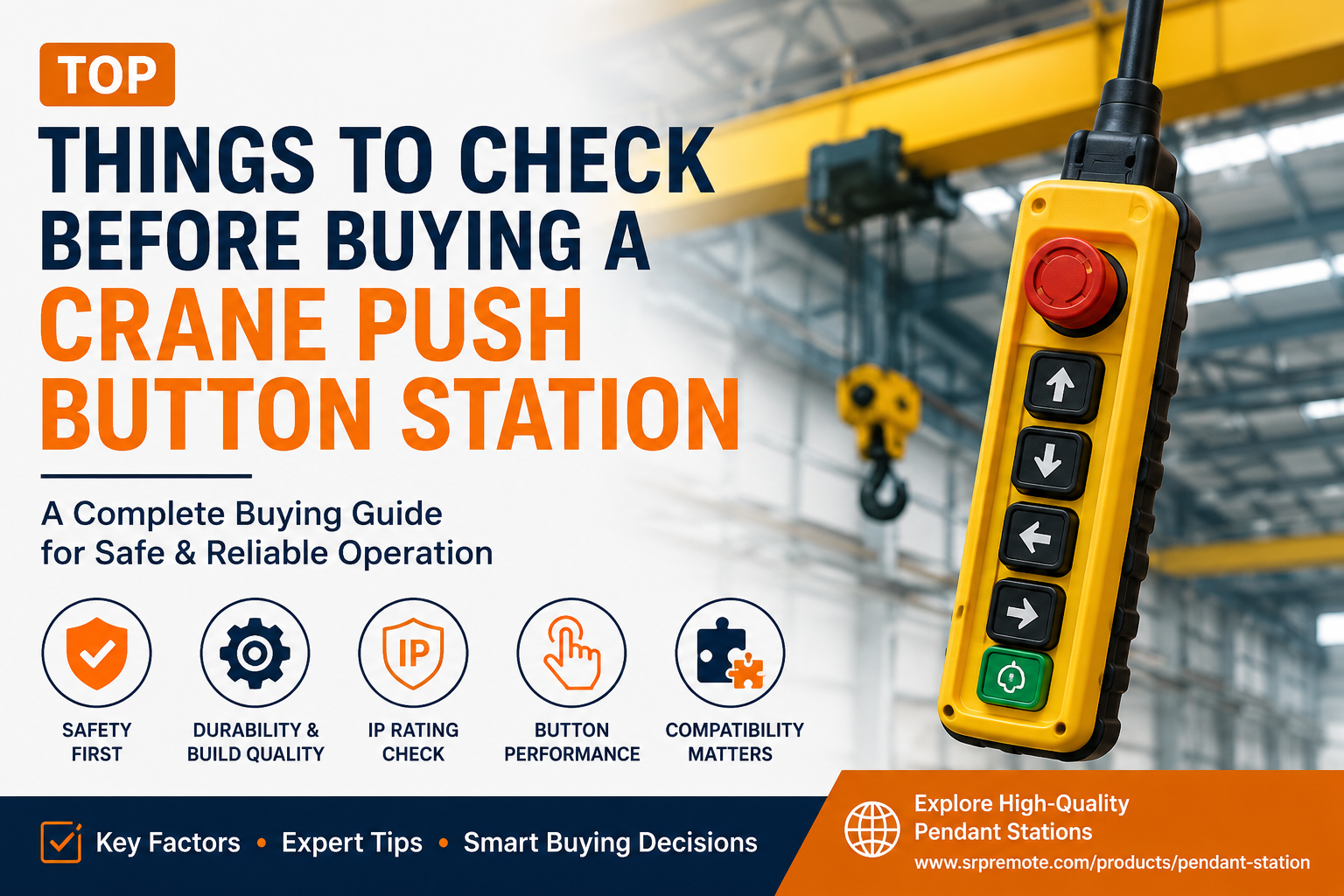
-
Admin
- 30 June 2026
Industrial cranes play a vital role in manufacturing plants, warehouses, steel industries, and fabrication units. While the crane itself handles the heavy lifting, the crane push button station is what gives operators complete control over every movement. Choosing the right control station isn’t just about functionality- it directly impacts workplace safety, productivity, and equipment reliability.
Unfortunately, many businesses focus only on the price when buying a pendant station. They often overlook factors like durability, safety ratings, button quality, and compatibility with their crane system. This can lead to frequent breakdowns, higher maintenance costs, and even safety risks.
Whether you’re replacing an existing pendant push button or installing a new overhead crane, this guide will help you understand what really matters before making a purchase.
What Is a Crane Push Button Station?
A crane push button station, also known as a pendant station or push button station, is a wired control device used to operate overhead cranes, hoists, and lifting equipment. It typically hangs from the crane, allowing operators to control movements such as:
- Hoist Up
- Hoist Down
- Trolley Left & Right
- Bridge Forward & Reverse
- Emergency Stop
Unlike wireless remote controls, pendant stations provide direct wired communication, making them a reliable choice for many industrial environments.
Why Choosing the Right Pendant Station Matters
A low-quality pendant station might work initially, but industrial environments are demanding. Dust, heat, vibration, oil, and continuous operation can quickly damage poorly built control equipment.
A high-quality crane push button station offers several advantages:
- Safer crane operation
- Better operator comfort
- Longer service life
- Reduced maintenance costs
- Higher productivity
- Improved control accuracy
Since the pendant station is one of the most frequently used crane components, investing in quality can save significant costs over time.
1. Build Quality Should Be Your First Priority
Industrial cranes often operate in harsh environments. A fragile plastic housing or poor-quality switches may fail after just a few months of use.
Before buying, check whether the pendant station offers:
- High-impact housing
- Heat-resistant material
- Oil and chemical resistance
- Durable cable entry
- Strong internal components
A rugged design helps the station withstand accidental drops, vibration, and daily industrial use.
Tip: Don’t compare pendant stations only by appearance. Internal component quality makes the biggest difference in long-term reliability.
2. Check the IP Protection Rating
Many buyers ignore the IP rating, but it’s one of the most important specifications.
The IP (Ingress Protection) rating indicates how well the control station is protected against dust and water.
For most industrial applications:
- IP65 is recommended for protection against dust and water jets.
- Lower ratings may be suitable only for clean indoor environments.
A higher IP rating helps prevent moisture and dust from entering the enclosure, reducing electrical failures and extending the product’s lifespan.
If your crane operates in steel plants, cement factories, or outdoor areas, choosing the right IP rating is essential.
3. Button Quality Makes a Big Difference
Operators may press the buttons hundreds of times during a single shift. Low-quality buttons wear out quickly, leading to sticking, delayed response, or unexpected failures.
When evaluating a pendant push button, look for:
- Smooth operation
- Clear tactile feedback
- Long mechanical life
- Comfortable button spacing
- Color-coded controls
Good button quality improves both productivity and operator confidence.
4. Emergency Stop Button Is Non-Negotiable
Every industrial crane control system should include a reliable emergency stop button.
In case of unexpected movement or hazardous situations, operators should be able to stop the crane immediately.
A quality emergency stop button should:
- Be easy to identify
- Lock securely when pressed
- Reset safely
- Meet industrial safety standards
Never compromise on emergency safety features just to reduce costs.
5. Choose the Right Number of Buttons
Not every crane requires the same control configuration.
Depending on your application, you may need:
- 2-button pendant station
- 4-button pendant station
- 6-button pendant station
- 8-button pendant station
- Multi-speed control stations
Buying more buttons than required increases costs, while too few buttons may limit functionality.
Discuss your crane’s movements with the supplier before selecting a model.
6. Single-Speed or Dual-Speed Operation?
One common mistake buyers make is choosing the wrong speed configuration.
Single-Speed Pendant Stations
Suitable for:
- Light-duty cranes
- Small workshops
- Simple lifting applications
Dual-Speed Pendant Stations
Ideal for:
- Precision lifting
- Heavy industries
- Steel plants
- Manufacturing units
Dual-speed control allows operators to perform both fast movement and precise positioning, improving safety and productivity.
7. Cable Quality Is Just as Important
Even the best pendant station can fail if the cable is of poor quality.
A good cable should offer:
- Flexibility
- Abrasion resistance
- Oil resistance
- Long bending life
- Secure cable grip
Industrial environments place constant stress on cables, so durability is essential for uninterrupted operation.
8. Operator Comfort Improves Productivity
The pendant station is handled throughout the day, so ergonomic design matters more than many people realize.
Look for features such as:
- Comfortable grip
- Lightweight construction
- Easy-to-press buttons
- Proper button spacing
- Clear markings
A well-designed pendant station reduces operator fatigue and improves overall efficiency.
9. Verify Compatibility with Your Crane
Not every push button station is compatible with every crane or hoist.
Before purchasing, confirm:
- Voltage compatibility
- Number of control motions
- Current rating
- Contact configuration
- Hoist manufacturer requirements
Choosing a compatible control station helps avoid installation issues and unnecessary modifications.
10. Buy from a Trusted Manufacturer
Perhaps the most important decision is choosing the right manufacturer.
A reputable supplier doesn’t just sell products—they provide technical guidance, quality assurance, and after-sales support.
When evaluating a manufacturer, consider:
- Industry experience
- Product certifications
- Manufacturing quality
- Technical support
- Availability of spare parts
- Warranty
Working with an experienced manufacturer ensures you’re investing in a reliable solution that supports your operations for years to come.
Why Many Industries Choose SRP Remote
When it comes to dependable industrial crane control solutions, choosing a trusted manufacturer makes all the difference.
SRP Remote designs and manufactures high-quality pendant stations, wireless remote control systems, and radio frequency remote controls for a wide range of industrial applications. Every product is built with a focus on durability, operator safety, and reliable performance in demanding environments.
If you’re looking for a reliable crane push button station, you can explore SRP Remote’s range of pendant stations here:
👉 https://srpremote.com/products/pendant-station