 Admin
Admin 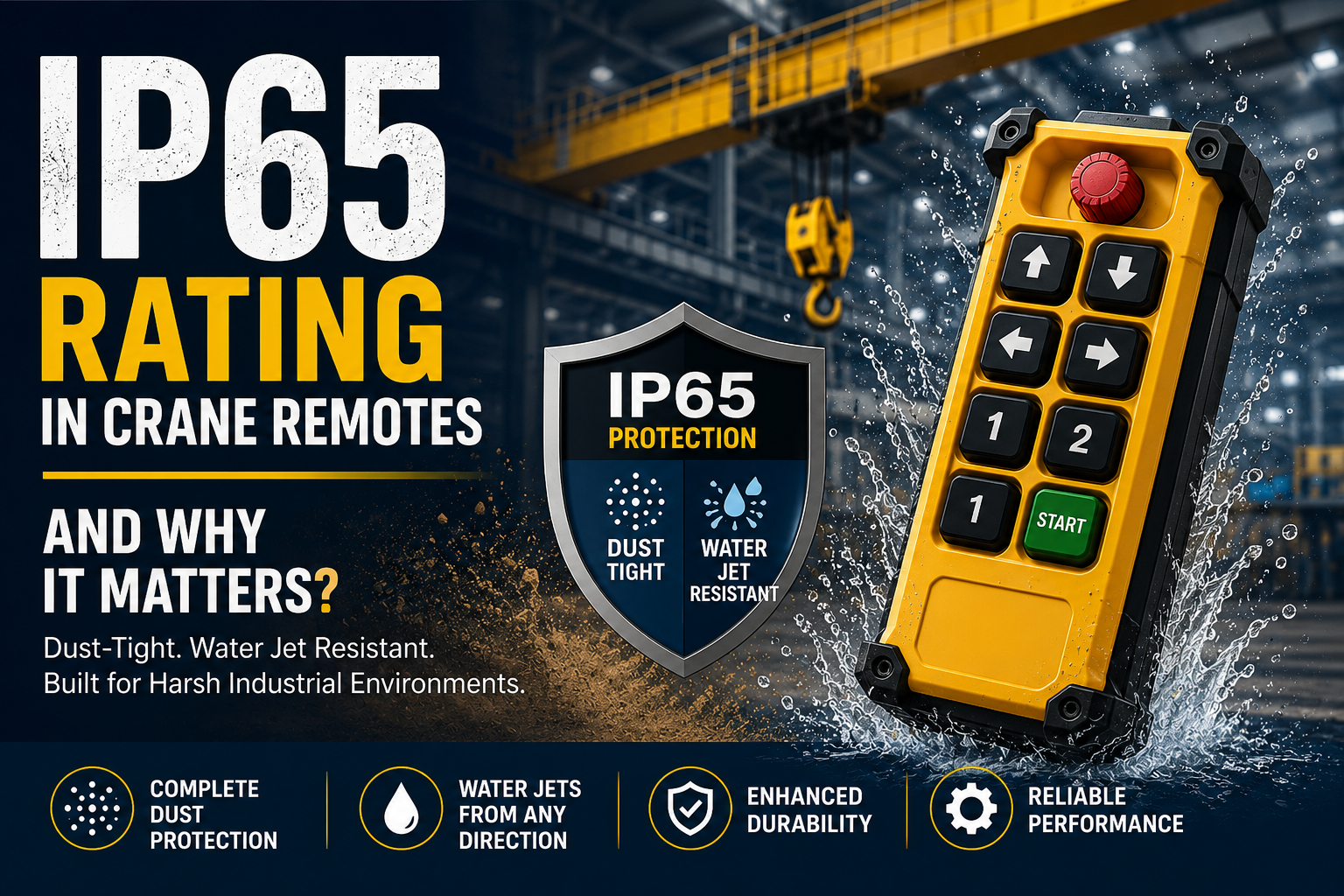
-
Admin
- 24 June 2026
Imagine this scenario: an overhead crane operator is moving a heavy load inside a busy manufacturing facility. Everything seems normal until the crane remote suddenly stops responding. Production comes to a halt, operators are left waiting, and safety becomes an immediate concern.
In many cases, the problem isn’t the crane itself. It’s the remote control.
Dust, moisture, water splashes, and harsh industrial conditions can damage sensitive electronic components inside a crane remote. This is why one specification often overlooked during the buying process can make a significant difference: the IP65 rating in crane remotes.
While buyers usually focus on operating range, battery life, and button configuration, the protection rating of a crane remote is equally important. It directly affects reliability, safety, maintenance costs, and equipment lifespan.
In this guide, we’ll explain what IP65 means, why it matters in industrial environments, and what you should look for when selecting an industrial wireless crane remote.
What Does IP Rating Mean?
IP stands for Ingress Protection. It is an internationally recognized standard defined by IEC 60529 that measures how well an electrical enclosure protects against dust, solid particles, and water.
An IP rating consists of two digits.
First Digit: Protection Against Solids
The first number indicates protection against dust, dirt, and solid particles.
Second Digit: Protection Against Water
The second number indicates resistance to water exposure.
Understanding IP65
| Digit | Protection Level | Meaning |
| 6 | Dust Protection | Completely dust-tight |
| 5 | Water Protection | Protected against water jets from any direction |
In simple terms, an IP65 crane remote control is designed to prevent dust from entering the enclosure while also resisting water spray and splashes encountered in industrial environments.
What Specifically Is IP65?
An IP65-rated crane remote offers two important layers of protection.
Complete Dust Protection
The “6” in IP65 is the highest level of protection against dust ingress.
This means:
- No dust can enter the enclosure
- Internal electronics remain protected
- Buttons and circuit boards are shielded from contamination
- Performance remains reliable in dusty environments
Water Jet Protection
The “5” means the device can withstand low-pressure water jets from any direction.
This protects the remote from:
- Rain exposure
- Water splashes
- Equipment cleaning operations
- Wet industrial environments
However, IP65 does not mean the remote can be submerged in water.
IP65 vs Other Common Protection Ratings
When comparing crane remotes, you may come across different IP ratings.
| Rating | Dust Protection | Water Protection |
| IP54 | Limited dust protection | Water splashes |
| IP65 | Complete dust protection | Water jets |
| IP66 | Complete dust protection | Powerful water jets |
| IP67 | Complete dust protection | Temporary water immersion |
When Is IP65 Enough?
IP65 is suitable for most industrial crane applications, including:
- Manufacturing plants
- Steel processing facilities
- Warehouses
- Fabrication workshops
- Material handling operations
- Outdoor crane installations exposed to rain
When Might IP66 or IP67 Be Needed?
Higher ratings may be preferred when equipment is exposed to:
- Frequent high-pressure washdowns
- Extreme weather conditions
- Marine environments
- Temporary water immersion risks
For the majority of crane operations, however, IP65 provides an excellent balance of protection and practicality.
Why IP65 Matters for Industrial Crane Remotes
Industrial environments are rarely clean or controlled.
Crane remotes are regularly exposed to conditions that can quickly damage unprotected electronics.
Fine Dust and Airborne Particles
Facilities handling cement, minerals, coal, metal products, or raw materials often generate large amounts of airborne dust.
Over time, dust can enter poorly protected remotes and cause:
- Button failures
- Circuit damage
- Reduced responsiveness
- Electrical faults
Water Exposure
Many industrial facilities routinely wash equipment and production areas.
Outdoor crane systems may also face:
- Rain
- Water spray
- Condensation
Without adequate protection, moisture can penetrate the enclosure and damage sensitive components.
Oil Mist and Industrial Contaminants
Machine shops, fabrication facilities, and manufacturing plants often contain:
- Oil particles
- Grease
- Chemical residues
These contaminants can affect internal electronics and shorten equipment lifespan.
Humidity
High humidity levels can gradually contribute to corrosion and electrical failures.
An IP65-rated enclosure helps protect critical components from moisture-related damage.
Common Environmental Challenges for Crane Remotes
A crane remote may face dozens of environmental hazards during its lifetime.
Some of the most common include:
- Metal dust
- Grinding particles
- Cement dust
- Water splashes
- Rain exposure
- Oil mist
- Grease contamination
- High humidity
- Temperature fluctuations
- Outdoor weather conditions
This is why industrial operators increasingly prioritize crane remote protection ratings when selecting equipment.
What Happens If You Use a Non-IP65 Remote?
Choosing a lower-rated remote may seem like a cost-saving decision initially, but it can lead to significant operational issues.
Frequent Equipment Failures
Dust and moisture can gradually damage internal electronics, leading to unexpected breakdowns.
Signal Reliability Issues
Contamination inside the remote can affect switches and electronic components, resulting in unreliable performance.
Higher Maintenance Costs
Frequent repairs and replacement parts can quickly exceed the initial savings of purchasing a lower-rated remote.
Reduced Equipment Lifespan
Exposure to harsh conditions accelerates wear and tear on critical components.
Increased Safety Risks
Perhaps the most important concern is safety.
A crane remote that fails unexpectedly can:
- Interrupt lifting operations
- Create unsafe working conditions
- Increase operator stress
- Contribute to costly downtime
Reliable crane control is essential for maintaining safe material handling operations.
Industries Where IP65 Crane Remotes Are Essential
Steel and Metal Manufacturing
Steel plants generate extreme levels of dust, heat, and airborne particles.
IP65 protection helps keep remote controls operational in these demanding conditions.
Cement Plants
Cement dust can infiltrate electronics and cause premature equipment failure.
Dust-tight protection is critical in these environments.
Mining and Material Processing
Mining operations often involve dust, moisture, vibration, and continuous equipment usage.
An IP65 industrial remote control offers valuable protection.
Shipyards and Ports
Outdoor crane systems are regularly exposed to:
- Rain
- Humidity
- Water spray
Protection against environmental exposure becomes essential.
Power Generation Facilities
Maintenance cranes and material handling systems require reliable operation in demanding industrial environments.
Automotive Manufacturing
Production downtime can be costly.
Reliable crane controls help support uninterrupted manufacturing operations.
Cold Storage and Food Processing Facilities
Regular cleaning procedures expose equipment to water and moisture, making IP65 protection highly beneficial.
How Is IP65 Testing Performed?
A genuine IP65 rating is not simply a marketing claim.
Manufacturers must verify performance through controlled testing procedures.
Typical evaluations include:
Dust Chamber Testing
The equipment is placed inside a controlled dust environment to ensure no particles enter the enclosure.
Water Jet Testing
The enclosure is subjected to water jets from multiple directions to verify protection levels.
Seal Integrity Verification
Gaskets, buttons, and enclosure joints are inspected to ensure proper sealing.
Functional Testing
After exposure testing, the device is checked to confirm normal operation.
When purchasing a crane remote, it is important to verify that the rating has been properly tested and documented.
What to Check When Buying an IP65 Crane Remote
Not all products claiming IP65 protection deliver the same level of quality.
Before making a purchase, consider the following:
Verify the IP Rating
Ask for documentation confirming the protection rating.
Check Enclosure Quality
Look for durable industrial-grade materials designed for harsh environments.
Review Certification Standards
Independent certifications provide additional confidence in product quality.
Evaluate Manufacturer Experience
Choose suppliers with experience in industrial crane control systems.
Request Test Reports
Reputable manufacturers should be able to provide supporting test documentation when requested.
SRP Remote’s IP65-Rated Crane Remote Solutions
At SRP Remote, industrial reliability is a key design priority.
Our Robustronic Series and New Edge Series wireless crane remote controls are designed for demanding material handling applications where dust, moisture, and harsh operating conditions are common.
Key advantages include:
- IP65-rated protection
- Industrial-grade construction
- Reliable wireless communication
- Ergonomic operator design
- TÜV SÜD certified solutions
- Suitable for overhead cranes, EOT cranes, hoists, and material handling systems
These systems are trusted across various industrial sectors where reliability and safety are critical to daily operations.
Conclusion
The IP65 rating in crane remotes is much more than a technical specification. It represents a critical level of protection that helps ensure reliable performance in challenging industrial environments.
With complete dust protection and resistance to water jets, IP65-rated crane remotes are well-suited for manufacturing facilities, steel plants, warehouses, mining operations, ports, and other demanding applications.
When selecting a crane remote control system, don’t focus only on range, buttons, or battery life. The protection rating plays a major role in reliability, equipment lifespan, maintenance costs, and operator safety.
If you’re looking for dependable IP65-certified wireless crane remote controls, explore SRP Remote’s industrial solutions or contact our team for expert guidance on selecting the right system for your application.
Frequently Asked Questions
What does IP65 mean in simple terms?
IP65 means a crane remote is completely protected against dust and can withstand water jets from any direction.
Is IP65 good enough for outdoor crane use?
Yes. IP65 is suitable for most outdoor crane applications and provides protection against rain, dust, and water splashes.
What is the difference between IP65 and IP66?
Both ratings are dust-tight. IP66 offers additional protection against more powerful water jets.
Do all crane remotes have IP ratings?
No. Protection levels vary between manufacturers and models. Always verify the rating before purchasing.
Which IP rating is best for crane remotes in dusty environments?
IP65, IP66, and IP67 all provide complete dust protection. The best choice depends on the level of water exposure in the operating environment.
Can an IP65 crane remote be used in steel plants?
Yes. IP65-rated crane remotes are commonly used in steel manufacturing environments because they provide excellent protection against dust and airborne particles.
How can I verify if a crane remote is truly IP65 certified?
Request certification documents, testing reports, and product specifications from the manufacturer.