 Admin
Admin 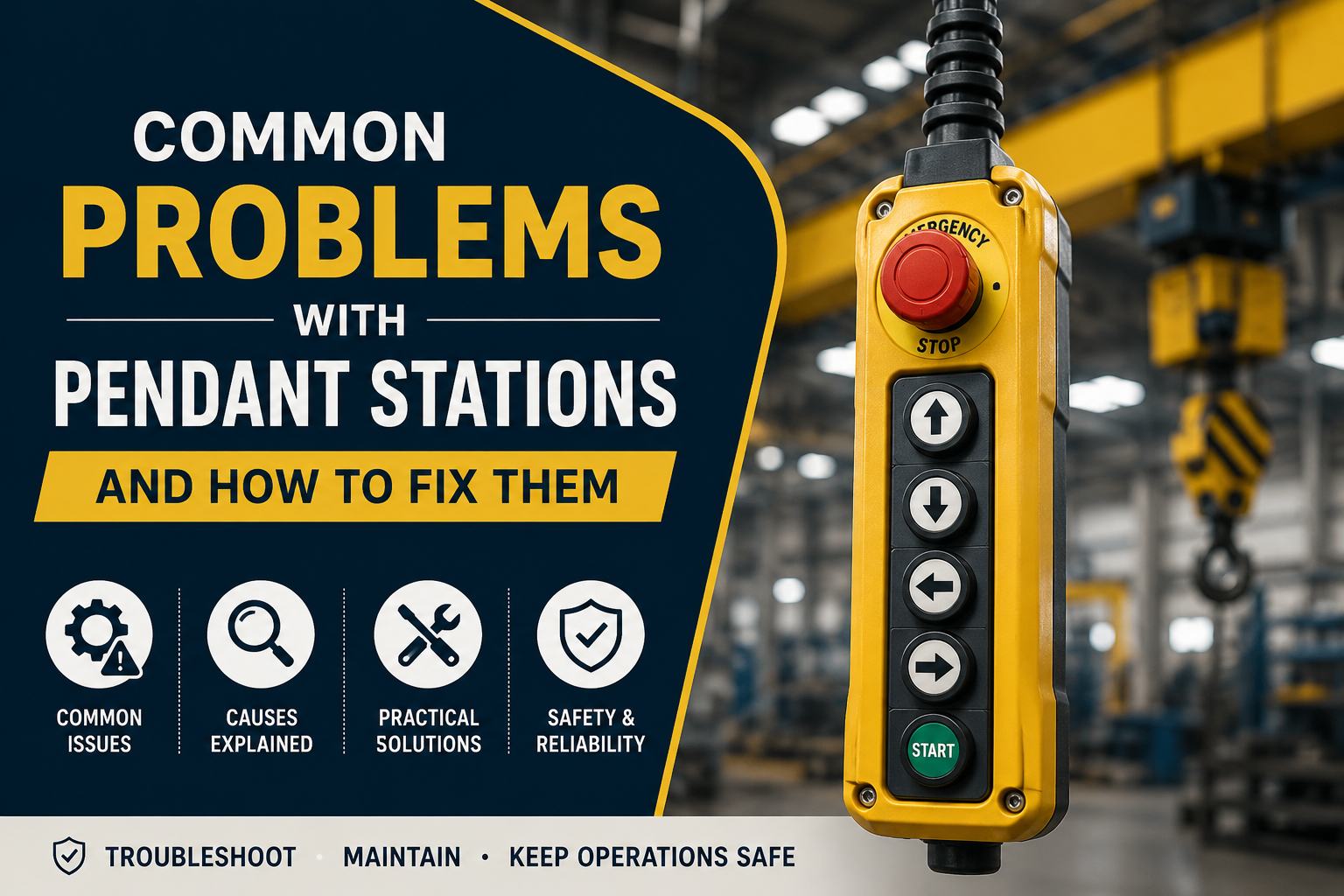
-
Admin
- 08 June 2026
The first sign of a pendant station problem is often something small.
Maybe a button needs to be pressed twice before the crane responds. Perhaps the lifting motion feels delayed, or the emergency stop button doesn’t feel as smooth as before. Many operators ignore these early warning signs because the crane is still working.
A few days or weeks later, that small issue can turn into unexpected downtime, production delays, or even a safety risk on the shop floor.
What many people don’t realize is that pendant stations rarely fail without warning. Most problems develop gradually through daily use, cable strain, dust buildup, moisture exposure, or simple wear and tear. The challenge is knowing what signs to look for before a complete failure occurs.
In busy industrial environments, pendant stations are handled hundreds of times every day. They are pulled, twisted, exposed to vibration, and sometimes operated in dusty, humid, or harsh conditions. Over time, even a high-quality pendant station can develop issues if regular inspections are overlooked.
This guide covers the most common pendant station problems found in cranes and hoists, explains why they happen, and provides practical solutions to help reduce downtime, improve safety, and extend the life of your equipment.
What Is a Pendant Station?
A pendant station is a handheld control device connected to a crane, hoist, or lifting system through a cable. It allows operators to control movements such as lifting, lowering, traversing, and traveling from a safe position.
Pendant stations are widely used in:
- Overhead cranes
- EOT cranes
- Electric hoists
- Gantry cranes
- Material handling systems
- Manufacturing facilities
- Warehouses
Their simple design, reliability, and ease of operation make them a popular choice across various industries.
Why Pendant Station Problems Should Never Be Ignored
A faulty pendant station does more than interrupt production. It can create serious safety risks if crane movements become unpredictable or controls fail to respond correctly.
Ignoring early warning signs often leads to:
- Unexpected downtime
- Higher maintenance costs
- Reduced equipment lifespan
- Lower operator confidence
- Workplace safety hazards
Regular inspection and prompt troubleshooting can prevent many of these issues.
1. Buttons Are Not Responding
One of the most common complaints from operators is that a button suddenly stops working or responds inconsistently.
Possible Causes
- Worn-out switch contacts
- Internal wiring problems
- Dust or dirt accumulation
- Damaged push buttons
- Electrical contact failure
How to Fix It
Start by inspecting the affected button for visible damage. Remove any dust or debris that may be interfering with movement. Check internal wiring connections and ensure terminals are properly secured.
If the button still fails to respond, the microswitch or contact block may need replacement.
Prevention Tip
Perform routine button testing during maintenance inspections to identify worn components before they fail.
2. Crane Movement Becomes Intermittent
Sometimes the crane responds normally, then suddenly stops or moves inconsistently while using the pendant station.
Possible Causes
- Loose wiring connections
- Damaged control cable
- Worn electrical contacts
- Internal component wear
How to Fix It
Inspect the pendant cable from end to end. Look for cuts, crushed sections, or signs of excessive wear. Open the pendant station enclosure and verify that all wiring connections are secure.
If cable damage is found, replacement is often the safest solution.
Prevention Tip
Avoid pulling or twisting the cable excessively during operation.
3. Push Buttons Get Stuck
Buttons that fail to return to their original position can create operational difficulties and safety concerns.
Possible Causes
- Dirt and debris buildup
- Moisture contamination
- Mechanical wear
- Damaged button mechanisms
How to Fix It
Clean the button assembly carefully and inspect for signs of wear. If the button housing or mechanism is damaged, replacement is recommended.
Never force a stuck button back into position, as this may worsen the problem.
Prevention Tip
Keep pendant stations clean, especially in dusty manufacturing environments.
4. Damaged Pendant Cable
The pendant cable experiences constant movement and is often exposed to harsh industrial conditions.
Over time, it can become one of the most vulnerable parts of the system.
Common Signs
- Visible cracks
- Frayed insulation
- Exposed conductors
- Frequent control interruptions
Possible Causes
- Continuous bending
- Heavy pulling
- Contact with sharp edges
- Aging cable materials
How to Fix It
Replace damaged cable sections immediately. Temporary repairs may not provide long-term reliability and could introduce safety risks.
Prevention Tip
Ensure proper cable support and strain relief to minimize stress on the cable.
5. Moisture or Water Entering the Pendant Station
Industrial environments often expose equipment to humidity, washdowns, rain, or condensation.
If moisture enters the pendant station, electrical problems can occur quickly.
Possible Symptoms
- Buttons responding unpredictably
- Electrical short circuits
- Corrosion on contacts
- Intermittent operation
How to Fix It
Inspect seals, gaskets, and cable entry points. Remove moisture, clean affected components, and replace damaged seals if necessary.
In severe cases, internal components may need replacement.
Prevention Tip
Use a pendant station with an appropriate IP protection rating for the operating environment.
6. Emergency Stop Button Failure
The emergency stop button is one of the most important safety features on any crane control system.
If it does not function properly, operations should be halted until the issue is resolved.
Possible Causes
- Mechanical wear
- Damaged contacts
- Lack of maintenance
- Internal component failure
How to Fix It
Test the emergency stop function regularly. If the button sticks, fails to latch, or does not stop crane movement immediately, replace the faulty component without delay.
Prevention Tip
Include emergency stop testing as part of every preventive maintenance inspection.
7. Cracked or Damaged Housing
Pendant stations often experience accidental impacts in busy industrial environments.
A cracked enclosure may seem like a minor issue, but it can expose internal components to dust, moisture, and physical damage.
Possible Causes
- Dropping the pendant station
- Impact from moving loads
- Harsh operating conditions
- Aging materials
How to Fix It
Replace damaged housings or the entire pendant station if structural integrity has been compromised.
Prevention Tip
Choose heavy-duty pendant stations designed for industrial applications.
8. Loose Internal Wiring Connections
Constant vibration and daily use can gradually loosen wiring inside the pendant station.
Common Symptoms
- Random loss of control
- Intermittent button operation
- Inconsistent crane response
How to Fix It
Inspect all internal terminals and tighten loose connections according to manufacturer recommendations.
Prevention Tip
Schedule periodic inspections of internal electrical connections.
Preventive Maintenance Tips for Longer Pendant Station Life
Many pendant station failures can be avoided with a simple maintenance routine.
Recommended Maintenance Checklist
✔ Inspect buttons for smooth operation
✔ Check cable condition regularly
✔ Verify emergency stop functionality
✔ Clean dust and debris from the enclosure
✔ Inspect cable entry points and seals
✔ Look for cracks or physical damage
✔ Test all crane movements before operation
✔ Tighten internal electrical connections when necessary
Preventive maintenance not only reduces breakdowns but also extends the service life of the equipment.
When Should You Replace a Pendant Station?
While some issues can be repaired, replacement may be the better option when:
- Failures occur frequently
- Multiple buttons stop functioning
- Cable damage becomes extensive
- The housing is severely damaged
- Spare parts are difficult to obtain
- Safety is compromised
Investing in a reliable replacement can often reduce long-term maintenance costs and improve operational reliability.
Choosing the Right Replacement Pendant Station
If replacement becomes necessary, consider the following factors:
Number of Control Buttons
Choose a configuration that matches your crane or hoist requirements.
Single-Speed or Two-Speed Operation
Different applications require different control levels.
Environmental Protection
Look for suitable IP ratings if the pendant station will be exposed to dust, moisture, or outdoor conditions.
Build Quality
Heavy-duty industrial environments require durable materials and robust construction.
Safety Features
Ensure the pendant station includes a reliable emergency stop button and meets relevant safety standards.
Final Thoughts
A pendant station may seem like a simple component, but it plays a critical role in crane safety and operational efficiency. Problems such as unresponsive buttons, damaged cables, moisture ingress, or faulty emergency stops should never be ignored.
Regular inspections, preventive maintenance, and timely repairs can help prevent costly downtime and keep crane operations running smoothly.
When replacement becomes necessary, choosing a high-quality pendant station designed for industrial use can improve reliability, enhance safety, and support long-term performance.
Need a New Pendant Station?
Frequent button failures, damaged cables, or unreliable operation are often signs that it’s time for a replacement.
Explore SRP Remote‘s range of industrial pendant stations designed for crane and hoist applications. Whether you need a compact unit or a multi-button configuration, our solutions are built for safety, durability, and dependable performance.
View Pendant Stations →