 Admin
Admin 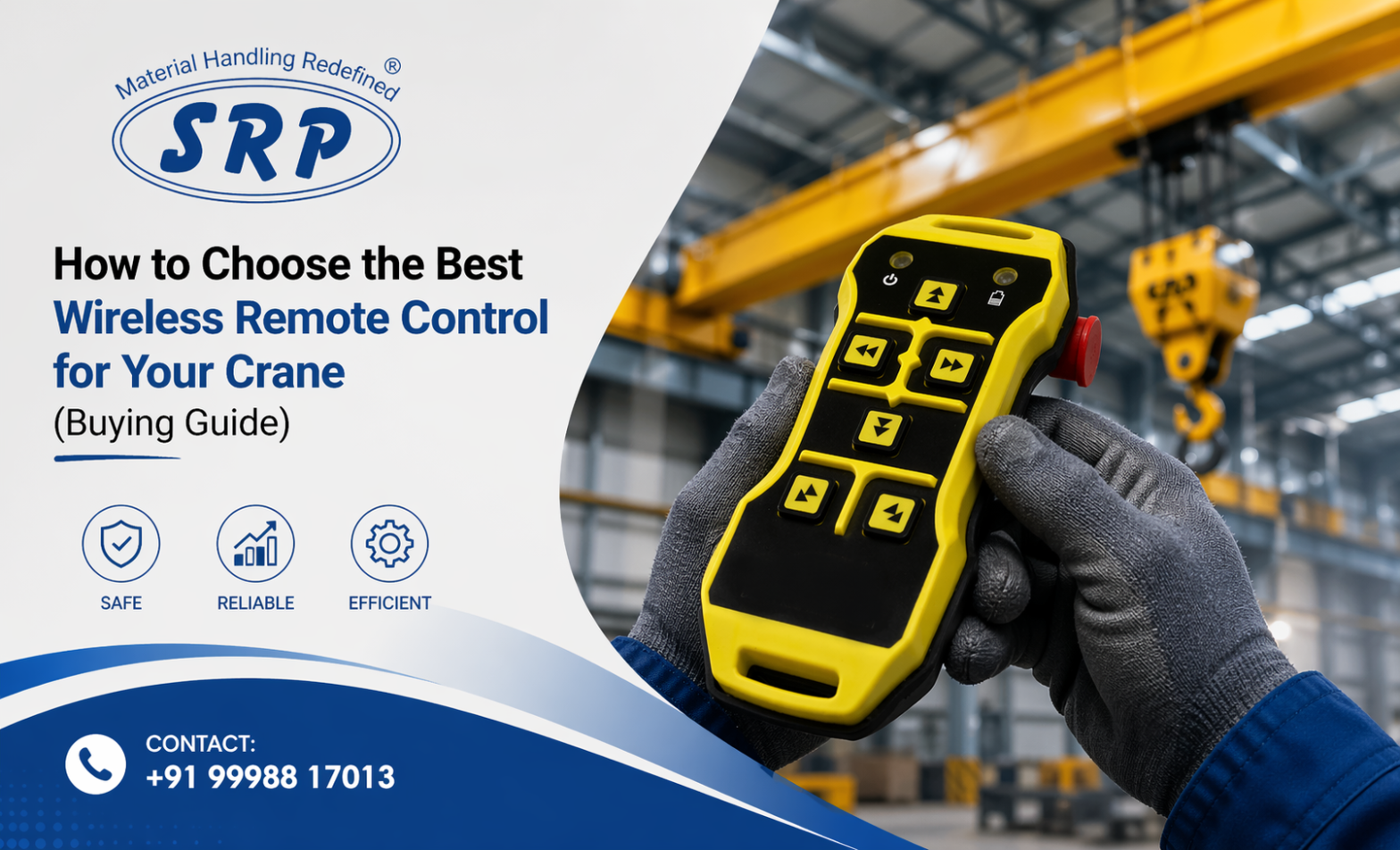
-
Admin
- 12 April 2026
Many businesses switch to wireless crane controls expecting better performance, but not all systems deliver the same results. Some struggle with signal range, others lack durability, and a few simply don’t match the crane setup. That’s why choosing the right wireless remote control requires more than just comparing prices, it requires understanding your real operational needs.
Whether you operate in manufacturing, construction, or warehousing, upgrading to a wireless crane remote control system can dramatically improve operations.
But here’s the challenge:
With so many options available, how do you choose the right wireless remote control for your crane?
This guide breaks it down in a simple, practical way, so you can make a confident, ROI-driven decision.
Why Wireless Crane Remote Controls Are Essential Today
Traditional wired pendant controls limit movement and reduce visibility. In contrast, industrial wireless remote control systems offer:
- Freedom of movement for operators
- Improved safety with better visibility
- Faster operations and increased productivity
- Reduced wear and tear on cables
This is why industries are rapidly shifting toward wireless crane control systems in India and globally.
Key Factors to Consider When Choosing a Wireless Crane Remote
1. Application & Crane Type
Start by understanding your requirement:
- Overhead cranes
- Gantry cranes
- EOT cranes
- Tower cranes
Each application demands a different remote control configuration.
Example: A heavy-duty steel plant crane requires a more robust system than a warehouse lifting crane.
2. Operating Range & Signal Stability
One of the most critical factors is signal range and reliability.
Look for:
- Long operating range (typically 100–300 meters or more)
- Strong anti-interference capability
- Stable RF communication in industrial environments
High-quality radio frequency remote controls ensure uninterrupted operation even in noisy environments.
3. Safety Features (Non-Negotiable)
Safety should never be compromised.
Choose a system with:
- Emergency stop button (E-stop)
- Fail-safe system (auto shutdown on signal loss)
- Secure frequency coding to prevent interference
- Shock and impact resistance
A good crane remote control system reduces workplace accidents significantly.
4. Battery Life & Power Efficiency
Downtime due to battery failure can cost you money.
Check for:
- Long battery backup
- Rechargeable battery options
- Low battery warning indicators
Advanced wireless remotes are designed for continuous industrial usage.
5. Number of Functions & Customization
Different cranes require different controls.
Look for:
- Single-speed or double-speed control
- Multi-function buttons (hoist, trolley, travel, etc.)
- Customizable configurations
A flexible system ensures your remote fits your exact operational needs.
6. Build Quality & Durability
Industrial environments are harsh.
Your remote should be:
- Dustproof and waterproof (IP-rated)
- Resistant to heat, oil, and chemicals
- Designed for rough handling
Always choose heavy-duty industrial remote controls for long-term reliability.
7. Ease of Installation & Maintenance
Complicated systems slow you down.
Go for:
- Plug-and-play installation
- Easy pairing and setup
- Minimal maintenance requirements
A simple system saves both time and operational cost.
8. Certifications & Compliance
Ensure the product meets industry standards:
- CE certification
- ISO standards
- Local safety compliance
This ensures quality, safety, and legal reliability.
9. Manufacturer Reputation
Not all suppliers are equal.
Choose a trusted manufacturer that offers:
- Proven industry experience
- Technical support
- Spare parts availability
- Custom solutions
This directly impacts long-term performance and ROI.
Cost vs Value: What Should You Focus On?
Many buyers make the mistake of choosing the cheapest option.
Instead, focus on:
- Reliability
- Safety
- Long-term durability
- After-sales support
Investing in a high-quality industrial wireless remote control system reduces downtime and increases productivity, giving better ROI.
Common Mistakes to Avoid
- Ignoring safety features
- Choosing low-quality, unbranded products
- Not checking compatibility with crane type
- Overlooking after-sales support
- Buying based only on price
Avoid these, and you’ll save both time and money.
How the Right Remote Improves Productivity
A well-chosen wireless remote can:
- Increase operational speed
- Reduce operator fatigue
- Minimize errors
- Improve workflow efficiency
This directly impacts your business profitability.
Final Checklist Before Buying
✔ Compatible with your crane type
✔ Strong signal range
✔ Advanced safety features
✔ Durable industrial design
✔ Reliable manufacturer support
Conclusion
Choosing the best wireless remote control for your crane is not just a technical decision, it’s a business decision.
The right system will:
- Improve safety
- Boost productivity
- Reduce downtime
- Deliver long-term value
Ready to Upgrade Your Crane Control System?
If you’re looking for a high-performance, reliable, and customizable wireless crane remote control, it’s important to choose a manufacturer that understands industrial needs.
👉 Explore advanced solutions designed for real-world applications
👉 Get expert guidance tailored to your crane system
👉 Ensure maximum safety and efficiency
Contact SRP Remote today to find the perfect solution for your business.