 Admin
Admin 
-
Admin
- 29 March 2026
In any industrial setup, crane operations are not just about lifting loads, they’re about control, timing, and safety. A small mistake or delay can lead to damaged material, lost time, or even serious accidents.
That’s why the control system matters more than most people think.
Even with modern wireless solutions available, many industries still rely on the pendant push button. It may look simple, but in real working conditions, simplicity often turns out to be the biggest strength.
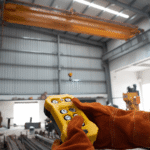
You’ll still see a crane pendant in fabrication units, warehouses, and manufacturing plants where work happens continuously and there’s no room for uncertainty.
This isn’t about old vs new technology, it’s about what actually works on the ground.
1. Consistent and Reliable Operation
Why it makes a difference
- No signal dependency
- No interference issues
- No sudden disconnections
In a real factory environment, there are multiple machines running at the same time. Metal structures, electrical panels, and heavy equipment can all interfere with wireless systems.
A pendant push button avoids all of that.
Because it is directly wired, the response is immediate. When the operator presses a button, the crane reacts instantly—no delay, no doubt. That level of predictability builds trust over time.
And in industrial work, trust in equipment is everything.
2. Better Control at Close Range
What operators actually experience
- Direct view of the load
- Better judgment of movement
- More confidence during operation
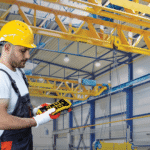
When an operator uses a crane pendant, they are not controlling the crane from a distance, they are part of the operation.
They can hear the machine, see the load swing, and adjust movements in real time. This becomes especially important when placing materials precisely or working in tight spaces.
A remote may offer flexibility, but for close-range work, nothing matches the control you get from being physically connected through a push button station.
3. Simple and Easy to Use
Why simplicity works
- No learning curve
- Clear button functions
- No technical setup required
In many industries, operators come from practical backgrounds. They need tools that are easy to understand and quick to use.
A push button station does exactly that.
There’s no pairing, no signal checking, no battery concerns. Just press and operate. This reduces hesitation and keeps the workflow smooth, especially during long shifts.
Simple systems also reduce mistakes, and in crane operations, that matters a lot.
4. Strong Safety Advantage
How it improves safety on the floor
- Operator stays aware of surroundings
- Immediate response to unexpected situations
- Built-in emergency stop for quick action
A pendant switch keeps the operator close enough to stay alert. They can see if someone enters the working area, notice unusual movement, or react if something doesn’t feel right.
That kind of awareness is harder to maintain when operating from a distance.
Also, having a physical emergency stop within reach adds an extra layer of confidence. In critical moments, quick reaction time can prevent bigger problems.
5. Cost-Effective for Daily Use
Practical cost advantages
- Lower upfront investment
- No batteries or signal devices
- Fewer components to manage
Not every operation needs high-end technology. In many cases, reliability and cost-efficiency are more important.
A pendant push button offers exactly that balance.
It does the job without adding unnecessary complexity or expense. For businesses managing multiple cranes or working on tight margins, this becomes a smart and sustainable choice.
6. Built for Tough Environments
Real working conditions it can handle
- Dust-filled workshops
- High-temperature areas
- Continuous daily usage
Industrial environments are demanding. Equipment is used for hours, sometimes non-stop, and it has to perform without frequent breakdowns.
A crane pendant is designed with this in mind.
Its structure is rugged, the cable is strong, and the overall design is made to handle rough usage. It’s not delicate equipment, it’s built for real work.
That durability reduces interruptions and keeps operations moving.
7. Easy Maintenance and Quick Repairs
Why this matters in daily operations
- Problems are easy to identify
- Repairs don’t take long
- No need for complex tools or specialists
When something stops working in a push button station, it’s usually straightforward to fix.
Maybe a button has worn out, or the cable needs attention. These are common issues, and they can be resolved quickly without replacing the entire system.
This reduces downtime and avoids long waiting periods for technical support.
In industries where time directly affects output, this simplicity becomes a big advantage.
Real-World Perspective
In theory, newer technologies always seem better. But on the shop floor, decisions are based on experience.
Many operators and supervisors continue to prefer a pendant switch because:
- It behaves predictably
- It doesn’t surprise you
- It keeps control in your hands
That kind of reliability builds confidence over years of use.
Conclusion
The pendant push button system proves that you don’t always need complexity to achieve efficiency. Its strength lies in doing the basics right – every single time.
From reliable performance to better control and easy maintenance, it checks all the boxes that matter in real industrial environments.
While technology will continue to evolve, the value of a dependable system like a crane pendant remains unchanged. And for many operations, a well-designed push button station is still the most practical choice.
FAQs
What is a pendant push button used for?
- To control crane movements directly
- Used for lifting, lowering, and positioning
- Common in industrial operations
Is it better than a wireless system?
- Better for close-range control
- More stable in interference-heavy environments
- Preferred where reliability is critical
Does it require frequent maintenance?
- No, basic checks are usually enough
- Most issues are easy to fix
- Designed for long-term use